
Best Foot Cream for Dry, Cracked Heels & Calluses: What Actually Works
Cracked heels are not just a matter of “dry skin.” The heel has to tolerate repeated pressure, friction and weight-bearing, while the skin on the sole is structurally different from skin on most of the body. When that thick plantar skin becomes dry and less flexible, callus can build up and small splits can develop into painful heel fissures.
This research-backed guide explains why heels crack, why ordinary body lotion may not be enough, which ingredient categories have the best evidence, and how to build a practical routine for rough, callused feet.
Research Snapshot
- Heel fissures form when dry, thickened skin is exposed to repeated mechanical stress. As the heel pad expands under body weight, less-flexible skin around the edge can split.
- Plantar skin is unusually thick and has no sebaceous glands. That helps it withstand friction, but it also means the soles do not receive sebum from oil glands the way many other body areas do.
- Moisturizers work best when they combine complementary functions. Humectants increase water content, emollients soften rough skin, occlusive ingredients reduce water loss, and keratolytic ingredients help loosen excessive surface buildup.
- Lactic acid and urea have clinical evidence in foot xerosis. In a randomized controlled trial in people with diabetes, a moisturizer containing 10% urea plus 4% lactic acid improved moderate-to-severe foot dryness more than the vehicle alone.
Table of Contents
- Why Heel Skin Is Different
- How Cracked Heels Form
- What a Good Foot Cream Should Actually Do
- Ingredient Guide: What Each Category Does
- What the Research Says About Lactic Acid
- A Simple Routine for Dry, Cracked Heels
- How Long Does It Take to See Results?
- When Cracked Heels Need Medical Attention
- How We Formulated Our Foot Cream
- Frequently Asked Questions
- Research & References
Why Heel Skin Is Different From Skin on the Rest of the Body
The soles of the feet are covered by thick, hairless plantar skin that is built to handle pressure and friction. The epidermis on the sole is much thicker than the epidermis on most body sites, and the palms and soles lack sebaceous glands, the glands that produce sebum.
That matters because heel skin has a difficult job. It needs to be tough enough to withstand standing and walking, but flexible enough to stretch as the heel pad compresses and spreads under body weight.
When the outer layer of that skin, the stratum corneum, loses water, it becomes harder and less flexible. Repeated pressure can also stimulate more thickening and callus formation. The combination of dryness + thickened skin + mechanical stress creates the conditions that make heel fissures more likely.
A 2026 review of heel fissures describes the same basic pattern: dry, thickened heel skin becomes less able to tolerate normal deformation during weight-bearing, and fissures can deepen when pressure continues. Read the 2026 heel-fissure review.
How Cracked Heels Form
Cracked heels, also called heel fissures, usually begin with dry or callused skin around the edge of the heel. When weight is placed on the foot, the heel pad expands outward. Flexible, well-hydrated skin can tolerate that movement better. Dry, rigid skin is more likely to split.
Common contributors include:
- Dry climate and low humidity
- Long or very hot showers
- Standing or walking for long periods
- Open-backed shoes and sandals
- Callus or hyperkeratosis
- Age-related changes in skin
- Higher mechanical load on the heels
- Skin or health conditions such as eczema, psoriasis, diabetes or hypothyroidism
The American Academy of Dermatology recommends moisturizing cracked heels regularly and notes that heel-care products may contain ingredients such as alpha hydroxy acids, urea or salicylic acid to help soften thick skin. See the AAD's guidance on dry, cracked heels.
What a Good Foot Cream Should Actually Do
For stubborn rough heels, hydration alone is often not enough. A well-designed foot cream usually needs to address several jobs at once:
- Increase water in the outer skin layer. Humectants help attract and retain water.
- Soften rigid, rough skin. Emollients fill in spaces between dry surface cells and improve flexibility.
- Reduce water loss. More occlusive ingredients help slow evaporation from the skin.
- Loosen excessive buildup. Keratolytic ingredients help thick, callused surface cells shed more evenly.
This combination is one reason a lightweight body lotion can feel pleasant but still leave thick heel skin rough. The issue is not simply a lack of moisture. It is often dryness plus hardened surface buildup plus repeated pressure.
A 2025 review of basic emollients notes that moisturizers often work best when ingredients with complementary functions are combined, such as humectants for hydration plus occlusive ingredients that reduce water loss. Read the 2025 review.
Ingredient Guide: What Each Category Does for Dry, Cracked Heels
| Ingredient or Category | Primary Role | Why It Can Help Feet |
|---|---|---|
| Lactic acid | AHA, humectant and keratolytic | Helps loosen rough surface buildup while also supporting hydration. |
| Urea | Humectant; keratolytic at higher concentrations | Helps increase hydration and soften thick, scaly skin. |
| Salicylic acid | Keratolytic | Helps break down thick surface scale and callus. It should not be used aggressively on open fissures, and people with diabetes or impaired circulation should get professional guidance before using strong exfoliating treatments on the feet. |
| Glycerin | Humectant | Helps draw and hold water in the stratum corneum. |
| Emollient oils and lipids | Softening and conditioning | Help rough, brittle-feeling skin feel smoother and more flexible. |
| Occlusive ingredients | Reduce water loss | Help slow evaporation so water stays in the outer skin layer longer. |
Important: ingredient concentration, pH, vehicle and the condition of the skin all affect how a finished product performs. A single ingredient name on a label does not tell the whole story.
What the Research Says About Lactic Acid for Dry, Rough Feet
Lactic acid is an alpha hydroxy acid, or AHA, but it is also related to components of the skin's natural moisturizing system. In cosmetic and dermatologic formulas, it can help loosen the bonds between dry surface cells while supporting water retention.
Clinical evidence is not limited to facial exfoliation. In a randomized, double-blind study involving 40 people with diabetes and moderate-to-severe xerosis of the feet, researchers compared a moisturizer containing 10% urea and 4% lactic acid with the moisturizer base alone. After four weeks, both sides improved, but the urea/lactic-acid formula produced significantly greater improvement in foot xerosis, and the difference persisted after treatment stopped. View the study on PubMed.
Earlier clinical research on dry skin also compared lactic-acid and lactate-containing moisturizers with non-lactated emollients and found improvements in xerosis during treatment. View the dry-skin study on PubMed.
A broader review of moisturizer research also notes that urea and alpha hydroxy acids can reduce excessive stratum-corneum thickness in hyperkeratotic feet without necessarily weakening barrier function when appropriately formulated. Read the moisturizer review.
What this means in practical terms: lactic acid can be useful in a foot cream because it addresses the rough surface buildup that often accompanies severe dryness. Moisturizers can then work on softer, better-hydrated skin rather than simply sitting on top of a thick callus.
For a deeper ingredient-specific discussion, read Lactic Acid for Feet: Benefits for Dry Skin, Cracked Heels & Calluses.
A Simple Routine for Dry, Cracked Heels
1. Keep bathing and soaking gentle
Very hot water can worsen dryness. If you soak your feet, keep the water comfortably warm and avoid prolonged soaking.
2. Pat the skin dry
Avoid aggressive rubbing with a towel. If you are applying moisturizer immediately, the skin can remain slightly damp.
3. Apply a targeted foot cream consistently
Massage the product over the heel, sole, sides of the foot and other rough areas. Daily use is more useful than applying a very heavy layer only occasionally.
4. Exfoliate gently when needed
A pumice stone may help reduce thick callus after bathing or soaking, but aggressive filing, razors and cutting tools can injure the skin. Do not exfoliate open, bleeding or painful cracks.
5. Protect very dry heels overnight
Applying a generous layer of moisturizer before bed and wearing clean socks can reduce friction and keep the product in contact with the skin longer.
6. Reduce repeated stress where possible
Supportive, well-fitting footwear can help limit the repeated spreading and friction that contribute to heel fissures.
How Long Does It Take to See Results?
The timeline depends on how dry, thick or fissured the skin is and whether an underlying condition is involved.
- Within several days: skin may begin to feel softer and less tight.
- Within 1 to 2 weeks: rough surface texture and flaking may begin to improve with consistent care.
- Over several weeks: stubborn callus and recurring heel roughness generally need continued maintenance.
Deep fissures, infection, significant pain and medically complicated feet should not be treated as ordinary cosmetic dryness.
When Cracked Heels Need Medical Attention
Seek care from a podiatrist, dermatologist or other healthcare professional if:
- Cracks are deep, bleeding, very painful, red, swollen or draining.
- You see signs of infection.
- The skin does not improve despite consistent care.
- You have diabetes, neuropathy, poor circulation or another condition that affects foot sensation or healing.
People with diabetes need extra caution because reduced sensation can make injuries harder to notice and fissures can become more serious. The clinical trial discussed above focused specifically on xerosis in people with diabetes, but that does not mean every exfoliating foot product is appropriate for every person with diabetes. Individual medical guidance matters.
How We Formulated Our Peppermint & Tea Tree Foot Cream
At Natural Escapes Body, we wanted our foot cream to address the two problems we see together most often: very dry skin and stubborn rough buildup.
Our Peppermint & Tea Tree Foot Repair Cream is formulated with 5% vegan lactic acid, plus aloe vera juice, glycerin, coconut oil, sunflower oil, olive oil and vitamin E. Peppermint, tea tree, rosemary and eucalyptus essential oils give the formula a fresh, invigorating foot-care experience.
The goal is not aggressive peeling. It is gradual smoothing plus rich, consistent moisturization so rough heels feel softer, smoother and better conditioned over time.
Build a Complete Foot-Care Routine
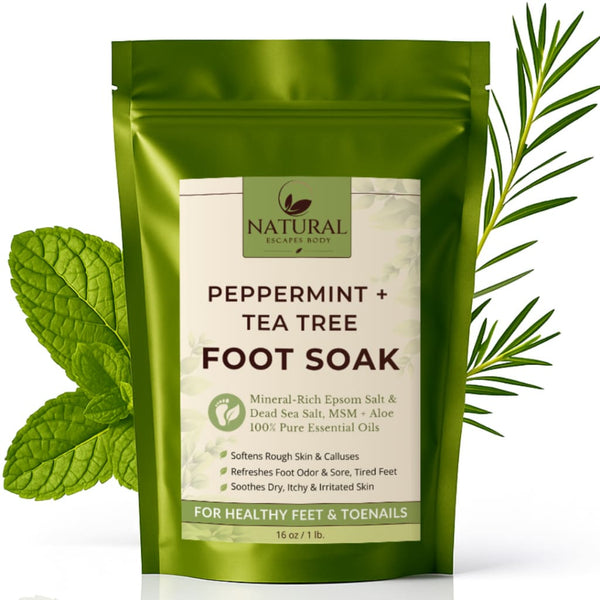
For people who enjoy soaking before moisturizing, our Peppermint & Tea Tree Foot Soak can be used before applying the cream. You can also browse the full Foot Care Collection.
Related Ingredient Guides
Frequently Asked Questions
Research & References
- American Academy of Dermatology: How to care for dry, cracked heels
- Pham HT, et al. Randomized controlled study of a moisturizer containing 10% urea and 4% lactic acid for xerosis of the feet
- Clinical research comparing lactic-acid/lactate moisturizers with emollient treatment for xerosis
- Wollenberg A, et al. 2025 review of basic emollients for xerosis cutis
- Fluhr JW, et al. 2025 review of skin hydration, barrier function and emollients
- Lodén M. Review of moisturizers and stratum-corneum interactions
- Bhattacharya S, et al. 2026 review of heel fissures and management
About the Author
Melissa Andrews is the founder and formulator behind Natural Escapes Body. She has been formulating natural and plant-forward skincare and personal-care products since 1997. With nearly 30 years of hands-on formulation experience, she combines practical product knowledge with published research to choose purposeful ingredients and create balanced formulas for real-world skin concerns.